How does the recent Supreme Court decision impact Pennsylvania?
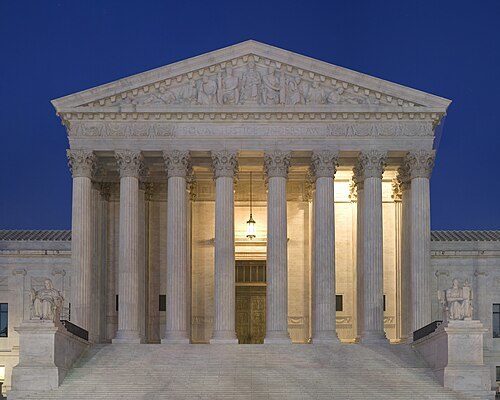
The Louisiana v Callais decision dramatically alters the redistricting landscape and adds further fuel to the mid-decade gerrymandering.
On April 29, the Supreme Court finally issued a ruling on Louisiana v Callais, first filed in 2024. The case tested the boundaries of Section 2 of the Voting Rights Act (VRA), passed in 1965 and used ever since to appeal racial gerrymandering at every level of redistricting.
In his 6-3 majority opinion, Justice Samuel Alito wrote that the former overly-broad interpretation of Section 2 forced states “to engage in the very race-based discrimination that the Constitution forbids.” Alito framed the case as confronting a “long-unresolved question whether compliance with the Voting Rights Act provides a compelling reason that may justify the intentional use of race in drawing legislative districts.”
According to the majority decision, consideration of race in drawing district lines is only permitted in “remediating specific, identified instances of past discrimination that violated the Constitution or a statute.”
As Justice Kagan wrote in her lengthy dissent: “Under the Court’s new view of Section 2, a State can, without legal consequence, systematically dilute minority citizens’ voting power.” The strict scrutiny requirements “leverage two features of modern political life: that racial identity and party preference are often linked, and that politicians have free rein to adopt partisan gerrymanders.”
Kagan explained that the Court’s “prior mistake” of refusing to rule on partisan gerrymanders “is something every day to regret, not to use as an excuse for stripping minority citizens of their voting rights.”
Kagan also noted that the Callais decision appears to contradict another recent opinion Allen v. Milligan (2022), in which “the Court upheld a vote-dilution challenge to a districting map … preserving Section 2 as a tool to prevent racially discriminatory redistricting.”
Civil rights and good government advocates sound the alarm
According to the Campaign Legal Center the Callais decision:
eviscerated Section 2 of the Voting Rights Act (VRA) and opened the door for states to enact discriminatory voting maps and laws.
This decision — which contradicts the text of the Voting Rights Act, the will of Congress and the Constitution — is one of the most consequential setbacks for our multiracial democracy in a generation.
With this ruling, the Court has struck down a congressional map that finally allowed Black voters in Louisiana to have the opportunity to elect candidates of their choice. More broadly, the justices have upended decades of precedent, ignored the will of Congress and left voters with little recourse to challenge racially discriminatory maps or voting laws.
From the League of Women Voters:
By weakening Section 2 to the point of inoperability, the Court sends a clear message: racial discrimination in redistricting against Black voters and other voters of color is acceptable as long as you don’t say it out loud. This will immediately open the door to racist redistricting.
NAACP Legal Defense Fund warns:
The Court’s decision threatens to further divide our nation and entrench power in the hands of the few. It puts the diversity of our elected bodies and representation of all communities at risk. As a result of the decision, fair districts across the nation will likely vanish as legislatures aim to gut representation for voters of color without checkpoints from the courts. As Justice Kagan stated in the dissent, “[t]oday’s decision renders Section 2 all but a dead letter” in the vast majority of cases.
What does the decision mean for Pennsylvania?
The implications of this decision will be tested for decades to come. PA election law experts suggest that Section 2 of the VRA has rarely been considered in past PA redistricting, and point to the PA Constitution and PA Supreme Court decisions as a bulwark against gerrymandering of all kinds. But PA constitutional protections are only as strong as the PA Supreme Court’s willingness to enforce them. The November 2025 judicial retention election demonstrated the increasing politicization of PA high court races, and the risk to justices if they challenge political power.
Both national parties have already made clear their interest in capturing the PA redistricting process as essential to majority control of Congress. The Republican State Leadership Committee, the group that devised RedMAP 2010, has identified Pennsylvania as among top priorities for controlling future redistricting and maintaining control of Congress, with an immediate focus on flipping seats in the PA House and holding Senate seats in contested districts.
In a memo shared with national press, liberal advocacy group Fair Fight Action has also identified PA as a top target, with 6 additional congressional seats possible: “This would require flipping one legislative chamber, the Senate — and redrawing aggressively by concentrating Republicans in central rural districts and spreading around urban Democratic voters.”
If Democrats flip the PA Senate, a mid-decade Congressional redistricting could take place as early as 2027. For Republicans, the incentive will be high to win the governorship and flip the PA House.
What’s the remedy?
A national law banning gerrymandering and requiring independent redistricting commissions would be the obvious best solution. So far just a few PA candidates for the US House have responded to FDPA’s Know Before You Vote survey. Please join us in asking them where they stand.
While a national solution would end the current tit-for-tat escalation, the Pennsylvania legislature already has a potential remedy waiting for a vote in both chambers. Senate Bill 131 and House Bill 31 were carefully drafted to protect ALL voters and communities from having votes diluted by racial or partisan gerrymandering. (Check Article 2 § 19 (a) 2-5 ).
Some PA legislators argue that until there is a national remedy, Pennsylvania should continue with its current systems. A large majority of PA voters from across the political spectrum disagree. Gerrymandering, no matter who does it, no matter the motive, removes accountability, undermines trust, and steals representation. As the most populous swing state in the nation, PA can protect voters, communities, and candidates from the toxic impact of the escalating national battle.